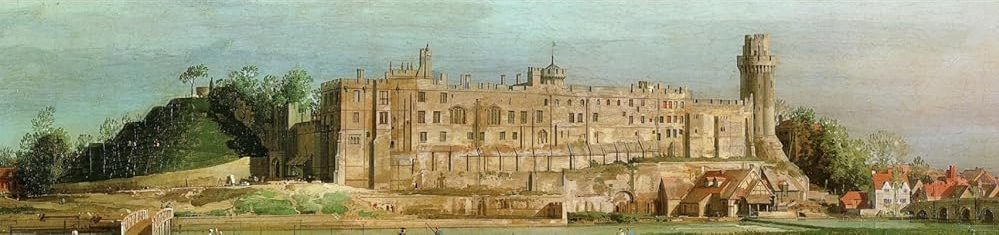
Gracechurch Street, Cheapside, and the Thames
When I wrote A Windmill with a View, I purposely avoided any of the action going to London. The plot did not call for it, but I also was afraid of London. I lived in England for six months, and I am not afraid to go to London, but I also had no idea how to write about it. What was Regency London like? Sure, I have read hundreds of Pride and Prejudice variations and other historical fiction set in the Regency era, and I have learned a great deal about what goes on in London, but I did not feel confident that I could own that world in my first novel.
I do not remember whether I deliberately decided to face my fears or simply was forced to write about London because my next plot demanded it, but as I was writing Mr. Darcy’s Diamonds, I learned a lot about London. I am no expert, as the city is obviously vast, but I feel confident that my characters get to live in a real place in my book.
In the regency romances I have read that are set in London, Austenesque or otherwise, the most common entertainments and past-times are balls, cards, the theater, bookshops, Vauxhall Gardens, and shopping for gowns or ribbons. I ended up including most of these in my book, but I also wanted to find out what else London had to offer in the early 1800s. After all, I did not have to occupy Elizabeth for a week or two in London but for several years.
Whenever possible, I read multiple sources for the locations my characters would visit because not all of my questions were answered.
Before Elizabeth was old enough for West London balls and Vauxhall Gardens, though, she needed a setting in a very different part of town. In Mr. Darcy’s Diamonds, Elizabeth leaves Longbourn when she is 15 to live with the Gardiners on Gracechurch Street. This is where she usually stays in Austenesque novels that have her spending any time in London, and it is where she says in canon before and after her trip to Hunsford, so why did I know so little about it?
I have read many wonderful novels that place a park convenient to the Gardiners’ home. Elizabeth walks there with a maid or with Jane. She takes her young cousins to feed bread to the ducks. It is sometimes across the street from the Gardiners’ home, as they live in a far nicer area than Caroline Bingley seems to think. It all sounds quite lovely. To really understand how my Elizabeth would live, I needed to see how close a good park was to the Gardiner home, so I essentially stopped writing for several weeks and searched maps and other documents and websites about the area surrounding Gracechurch Street.
Jane Austen does not usually tell us much about where her characters live beyond a county and a fictional village or house. We get some street names in Persuasion’s Bath and Sense and Sensibility’s London, but in Pride and Prejudice’s London, only Grosvenor Street for Mr. Hurst’s home and Gracechurch Street for the Gardiners are named. These two streets show the social gap between Darcy and his friends and Elizabeth and her family.
Because Austen is so good as to give us this information, I wanted to use it. Grosvenor Street was one of the most elite streets in London at the time. Gracechurch Street? Not so much. Right away, I realized Austen gives us a very narrow location for the Gardiners to live. She could have named so many other streets in the area if she had wanted to be vague. Perhaps she chose Gracechurch street because it starts with Gr, like Grosvenor. Or perhaps she wanted to precisely locate the Bennets’ good, honest, fashionable relatives in trade.
Gracechurch Street is very short, a quarter of a mile long, so we have a pretty good idea of where the Gardiners lived. At the north end of the street is Leadenhall Market, where much of the city’s meat was purchased. The market carried animals already dead or ready to be butchered. Imagine the smells surrounding this enormous market. About one-third to half of the way down Gracechurch Street (an eighth of a mile at most) was the Old Spread Eagle Tavern, or Spread Eagle Inn, depending on the source.
Like in Mr. Darcy’s Diamonds, the Spread Eagle, on 84 Gracechurch Street, was a coaching inn. Dutton’s Circulating Library was located at 45 Gracechurch Street. In Mr. Darcy’s Diamonds, I have added additional businesses and homes likely to be in this location at the time, including Mr. Gardiner’s warehouses. In canon, Pride and Prejudice‘s narrator, not Miss Bingley, tells us he lives “within view of his own warehouses” in the same sentence that we learn he is “so well-bred and agreeable.”
At the southern end of Gracechurch Street is Fish Street, which is about a tenth of a mile long and links the Gardiners’ street with the old London Bridge, the busiest bridge across the River Thames at the time and one of only three in central London. The roads have shifted slightly, but in the early 1800s, going down Gracechurch Street was a straight shot over the bridge. This was an extremely busy, crowded area. The Thames here is not the Docklands of farther east, but large ships would anchor in the middle of the river in this area and then unload cargo onto smaller boats and barges to transport to the docks along Thames Street. Rowboats transporting passengers also squeezed their way into the chaos near the bridge.
So is Gracechurch Street in Cheapside? No. Caroline Bingley gets this right, in canon, when she says Jane has an uncle “who lives somewhere near Cheapside.” Cheapside was a market area where all the best deals could be found. Mr. Darcy’s servants most likely shopped there for his needs. But in canon, Elizabeth tells her Aunt Gardiner that Mr. Darcy would never go to—not Cheapside but Gracechurch Street—himself: “Mr. Darcy may perhaps have heard of such a place as Gracechurch Street, but he would hardly think a month’s ablution enough to cleanse him from its impurities, were he once to enter it.”
How near Cheapside is Gracechurch Street, then? On the east side of the northern end of Gracechurch Street is Leadenhall Market. On the west side begins Cornhill Ward (a ward is a governmental boundary, and a parish is a church boundary). Just to the west of Cornhill Ward is Cheape Ward. The street called Cheapside is very close to Gracechurch Street but does not border it. Really, Cheapside seems like it was a busy but safer and more-pleasant area than Gracechurch Street with its meat market, inn yard, and London Bridge traffic coming up from the Thames.
Back to my search for a park—a couple of churches in the area looked promising, as they had small spots marked on maps as churchyards. I could find no evidence that they had any grass or trees, and most maps near the period show the areas as black, not green. Even if they had grass, they were tiny spaces and too close to the stench of animal slaughter to be a fun place to walk and refresh. Private parks may have existed nearby, though I found nothing promising, but to feed ducks or walk freely, Elizabeth would have had to take a carriage to one of the fashionable fenced or walled parks in the west, Hyde Park, the Green Park, St. James’s, etc. The wealthy had plenty of options.
This is not the fashionable London I have read about so many times; nor is it the idyllic Hertfordshire countryside Elizabeth is used to roaming. Read Mr. Darcy’s Diamonds to find out how Elizabeth Bennet finds a place in this vastly different environment.
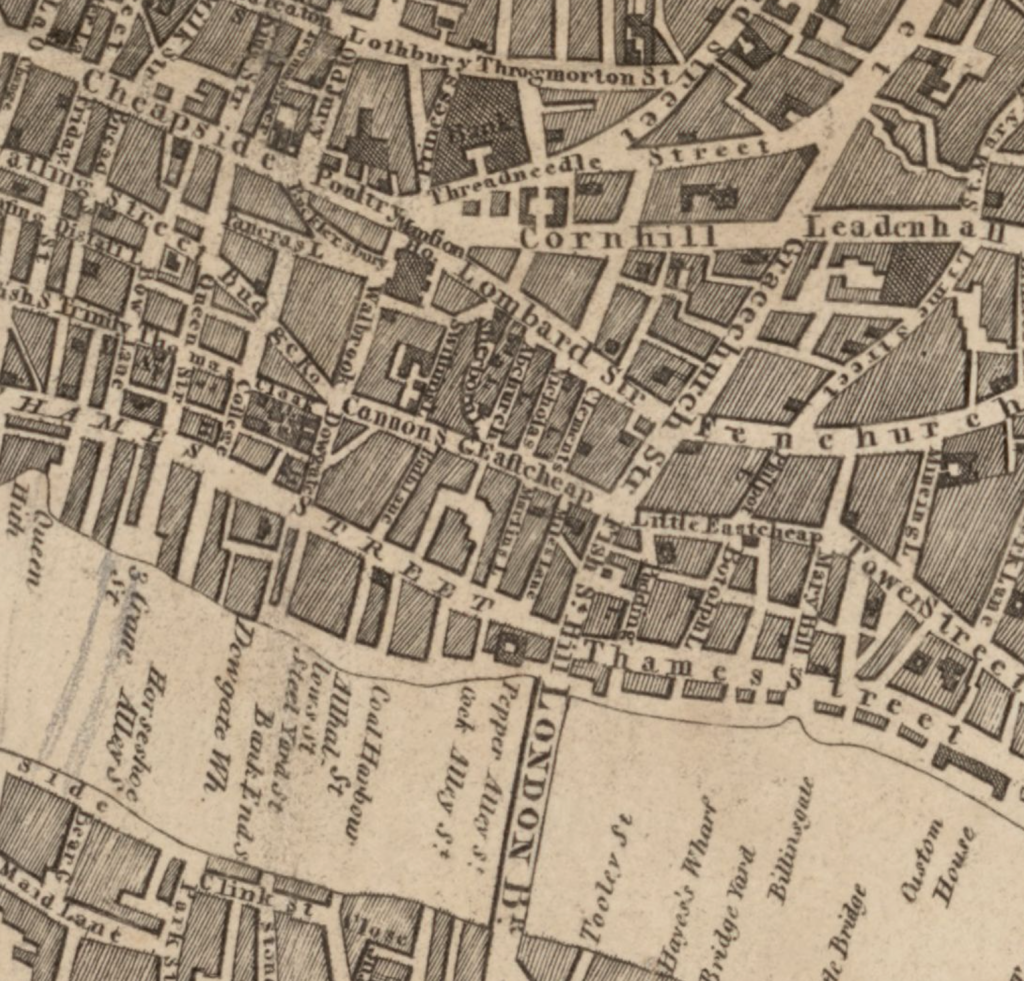
A new plan of the cities of London, Westminster, &c. &c., 1812. Reproduced with the permission of the National Library of Scotland.
Discover more from Author Kelona Salway
Subscribe to get the latest posts sent to your email.